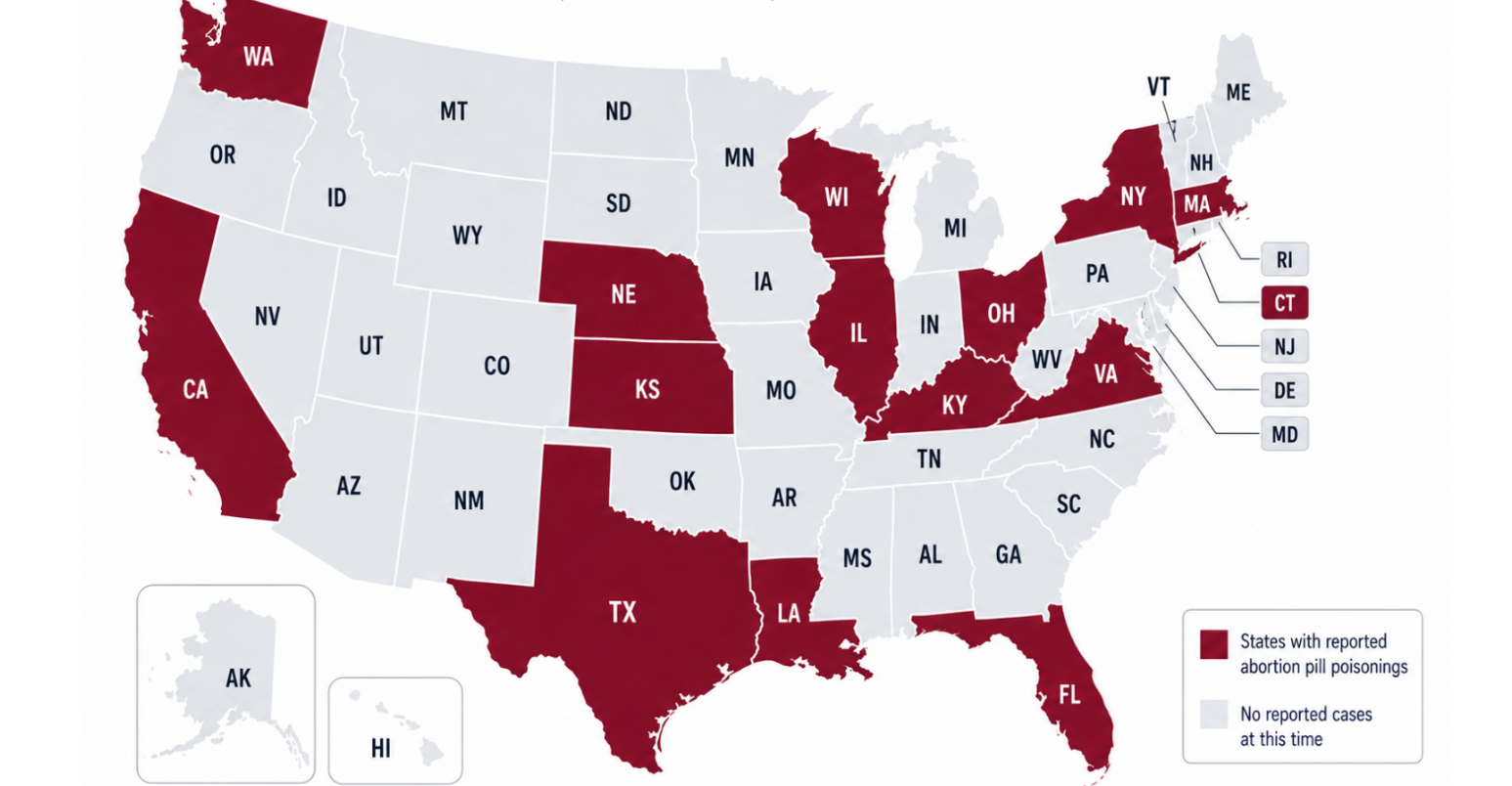





Planned Parenthood Great Northwest, Hawaii, Alaska, Indiana, Kentucky launched a “Just in Case Abortion Pills” option, encouraging women who are not pregnant to procure abortion pills in advance.
Advertised as a preventative measure so that they can access pills if they ever experience pregnancy, the service is available to women 18 and older. The multi-state Planned Parenthood affiliate says minors can access its “Just in Case Abortion Pills” with parental consent.
Initially launching in the states of Washington and Hawaii, the program allows people to procure pills through a $150 appointment either in-person or online. If done online, the pills will be mailed after a “telehealth” appointment. Those seeking other Planned Parenthood services can add the “Just in Case Abortion Pills” to their appointment for $100.
“For now, the service is self-pay only meaning it is not covered by insurance,” Planned Parenthood says, though “financial assistance may be available for those who qualify.”
[Click here to subscribe to Pregnancy Help News!]
During either an in-person or “telehealth” appointment, the abortion provider will instruct a woman on how to use the abortion pills before prescribing them. Critics say that this type of preemptive service eliminates medical oversight. The provider would not be present when women who order the pills online take them. Planned Parenthood says to store the abortion drugs in a safe, cool place, and that they expire around 2-3 years after they are prescribed.
Harming the fetus, harming the mother
The “Just in Case Abortion Pills” are another avenue to promote chemical abortion (also known as medication abortion). Consisting of two pills, chemical abortion involves a dose of mifepristone and misoprostol. Mifepristone is administered first, to block progesterone. This results in a starving or suffocating fetus lacking both food and oxygen. Misoprostol, taken 6-48 hours later, pushes the dead baby out of the mother’s body - if he or she has already died due to the mifepristone.
The abortion pill has documented health risks. Side effects include everything from a fever to death. The process of a medication abortion involves heavy bleeding - which can create a home for deadly bacteria like Clostridium sordelli.
Researchers who analyzed some 866,000 insurance claims stemming from chemical abortions found that nearly 11% of women underwent a severe adverse event within 45 days of taking the pills. Experiences ranged from hemorrhaging to sepsis.
Some statistics chemical abortions account for at least 63% of abortions in the U.S., with some estimates significantly higher.
More than 8,000 women have successfully reversed the effects of the abortion pill by having progesterone administered to reverse the effects of mifepristone. Known as Abortion Pill Reversal (APR) the treatment should be administered as soon as possible, ideally within 24 hours of taking the first pill - although successful reversals have occurred within 72 hours.
Heartbeat International manages the Abortion Pill Reversal Network (APRN) and regularly serves women who have started a chemical abortion, experience regret, and wish to try to save their child.
Women seeking to reverse the effects of the abortion pill can call the APRN helpline at 1-877-588-0333 or the chat feature on the APR website. Women who reach out will be connected with a healthcare professional, who will refer them to a medical provider in their area able to administer progesterone.
Growing abortion pill access
Despite the fact that smaller abortion providers like Plan C have been offering abortion pills in advance for years, the idea that one can get abortion pills by mail or that you can get them in advance is new to a lot of people, according to Elisa Wells, co-founder of Plan C. With a big name like Planned Parenthood getting on board, the idea is spreading.
According to Anna Fiastro, a research scientist at the University of Washington School of Medicine, the idea of stockpiling abortion pills in advance is catching on in states that have restricted abortion - largely because taking the pills would remove costly travel to pro-abortion states from the equation. This is circumventing the law in those pro-life states.
The Food and Drug Administration under President Trump has not made significant progress in a long-promised safety review of abortion drug mifepristone. In May, the Supreme Court temporarily sided with abortion advocates in preserving open access to chemical abortion drugs, blocking a lower court ruling that had reinstated safety measures on the pills, specifically an in-person doctor visit, while litigation proceeds in State of Louisiana et al v. Food and Drug Administration.
Planned Parenthood says on its “Just In Case Abortion Pills” webpage that, “abortion pills are a safe and effective way of ending an early pregnancy up to 12 weeks after your last menstrual period,” even though the FDA has approved mifepristone for use just through 10 weeks and safety risks for the chemical abortion pill have been well documented for some time.
Editor's note: Heartbeat International manages the Abortion Pill Rescue® Network (APRN) and Pregnancy Help News. Heartbeat is currently the subject of two lawsuits brought by state AGs concerning sharing information about Abortion Pill reversal.